Strengthening Food Resilience in Bungay and Surrounding Villages
Bungay Community Support (BCS) works across a sixmile radius of Bungay,
serving households facing illness, disability, financial hardship and social
disadvantage. Although the town is often seen as a prosperous market centre,
more than 11% of local residents experience financial hardship, placing the area
within the most deprived 40% of the country. Hidden behind the perception of
prosperity were families and individuals regularly forced to choose between
heating, rent, transport, and food.
A community pantry built on dignity and trust
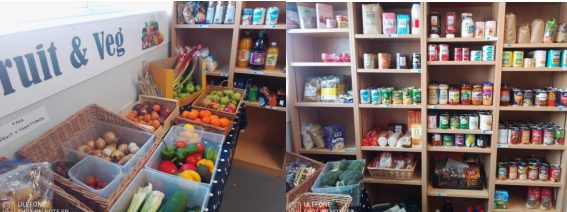
The East Suffolk Food Resilience Grant enabled BCS to strengthen and expand
its Food Hall pantry; a dignityfirst, choicebased model offering affordable
access to fresh, nutritious food each week. Before this project began, many
residents were skipping meals, relying heavily on processed food, or going days
without adequate nutrition. Others described avoiding support altogether due to
stigma or lack of appropriate, ongoing help.
The role of the funding
The grant funding allowed BCS to extend the working hours of its Food Hall
Supervisor, increase the number of weekly sessions, develop closer links with
local growers, allotments, and food suppliers, and coordinate informal cooking
guidance and mealplanning support. Perhaps most importantly, the funding
allowed the Food Hall to become a trusted anchor—somewhere residents could
not only access food but connect safely with wraparound services.
A hub for community support
The Food Hall quickly evolved into a multiagency support hub. Services such as
the East Suffolk Financial Inclusion Team, Realise Futures, CAES, DWP Job
Club, DANES, and Talking Therapies regularly supported residents directly from
the space. This warmhandover approach dramatically reduced missed
appointments and helped residents access financial advice, employment
guidance, wellbeing support, and digital help without the barriers that traditional
referrals often create.
Responding to growing demand
As the costofliving crisis intensified, demand for the Food Hall grew far beyond
initial expectations. Increased need placed pressure on available space,
volunteer capacity, and stock levels—made worse by a decline in both the quality
and variety of Fareshare supplies. Despite these challenges, BCS adapted
quickly. The team refined triage and assessment processes, strengthened
partnerships with local services and responded to residents’ needs with
compassion and flexibility.
Building skills through community
While formal cooking classes proved difficult for people to attend, informal
learning flourished. Shoppers began swapping recipes, discussing lowcost
ways to prepare fresh ingredients and building small peer groups that extended
beyond the Food Hall. These natural interactions became a powerful form of food
education rooted in everyday community connections.
Stories of impact
The impact of the project is perhaps most visible in the individual stories of
shoppers. One resident, Susan, arrived with three of her four children after
fleeing domestic abuse. The family had been placed in temporary
accommodation without proper appliances and had little food left. She had
initially been referred only for a Food Bank voucher, but the Food Bank was
closed for two more days. After sharing her circumstances, BCS provided an
emergency pack including fresh milk, cheese, bread, fruit, vegetables, and meat.
One of the children exclaimed with joy at the thought of eating properly again.
Over time, with weekly access to affordable groceries, Susan regained stability
and the ability to provide consistent meals for her children.
Another resident, Robert, stood outside the Food Hall for some time before
feeling able to enter. After losing his business during the pandemic, he was
struggling financially and emotionally. He was welcomed without judgement. With
gentle conversation, emergency food and links to financial and employment
support, Robert began to rebuild his confidence. Over the months that followed,
he connected with other shoppers, engaged with the DWP Job Club and started
experimenting with new recipes at home. Eventually, as his circumstances
improved he reduced his attendance voluntarily with regained pride in his
independence.
Community-wide impact
Overall, more than 115 residents benefited from the Food Hall during the year,
almost half of whom were children. The service provided households with the
breathing space needed to stabilise their finances, plan meals and avoid crisis.
Volunteers developed new operational and support skills alongside improved
coordination and safeguarding processes and the community strengthened its
capacity to support one another.
Looking ahead
Alongside the pantry, the new ‘Grow & Eat’ allotment partnership with Bungay
Town Council offered residents the chance to learn how to grow their own fresh
produce. Supporting longterm food independence through handson
experience with seasonal fruit and veg.
Sustainability
Despite its success, the project now faces sustainability challenges. Demand
continues to rise; supply chains remain inconsistent, and without multiyear
funding, the stability of the Food Hall is at risk. What is clear, is the model works
and the community depends on it. The Food Hall has not only improved food
access but has strengthened community connection, improved wellbeing, and
provided a gateway to longterm stability for many local residents.
Conclusion
Bungay Community Support is proud of what the Food Hall has become: a
dignified, empowering space where people feel seen, supported and connected.
With continued investment, it has the potential to protect vulnerable households
and build longterm resilience across Bungay and its surrounding villages for
years to come.